
Beyond Mobo: Where Companion Robots Are Heading
Last week we covered the launch of AiMOGA's Mobo, the company's first home companion robot. Mobo is part of a much bigger shift: companion robots are moving from novelty gadgets towards personal AI that remembers you and shares your physical space. Here's where things are heading.
1. Home robots are becoming much more capable
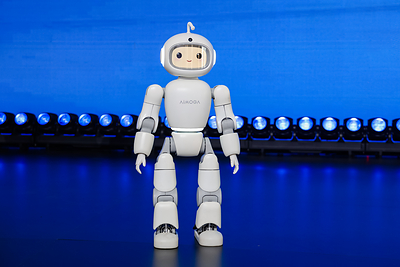
AiMOGA has opened global pre-orders for Mobo. Rather than simply chatting, it combines vision, movement and long-term memory. The company says Mobo can recognise family members, remember their habits and preferences, and break longer tasks into smaller steps. It is aimed at children, older people and whole families, with features such as storytelling for children and reminders for older family members. AiMOGA says more than 10,000 people have registered interest since Mobo first appeared at the World Robot Conference in August.
That matters because Mobo starts to look like an AI agent with a body, rather than a smart speaker on wheels.
2. Human-looking companions are getting more sophisticated
Realbotix takes a very different approach with Echo, launched on 26 October. Echo robots have lifelike silicone skin and detailed facial expressions, speak more than 100 languages, and can connect to AI models from OpenAI, Anthropic and Google. Buyers choose from four characters with different personalities. They are not cheap: the tabletop model costs US$11,950 and the full-body model US$59,950, plus a monthly subscription from US$19.99. Echo doesn't walk, and deliveries are planned for the second half of 2027.
So we're starting to see two different paths: cute, pet-like companions and deliberately human-like ones.
3. Cheap AI pets may be winning the first round
The early sales successes aren't the expensive humanoids. Fuzozo, a small plush AI pet from Shanghai company Robopoet, costs 399 yuan (about US$55) and has sold nearly 300,000 units in China since July 2025. Haivivi says its BubblePal, a talking device that clips onto a child's soft toy, has sold more than 300,000 units since launch.
People seem happy to build a relationship with something that looks nothing like a person.
4. A real consumer market at US$140–500
TechRepublic's October round-up of companion robots shows typical prices:
Eilik – US$139.99. A desktop companion that responds to touch and movement.
Mirumi – US$149.99. A bag charm that reacts to people nearby. It has no conversational AI.
Ropet KAMOMO – from US$299. A plush AI pet.
Casio Moflin – US$429. A plush pet that changes its behaviour based on how its owner treats it.
Loona Petbot Premium – US$499. A wheeled robot pet with connected conversation features.
These are US prices. Not all of these products are sold in Australia, so check availability, shipping and GST before buying.
5. AI companionship is escaping the robot altogether
Some companions don't have a robot body at all. Friend, an AI pendant designed as an emotional companion, relaunched in July as Friend 2.0 with a built-in speaker so it can talk back. The price rose from US$129 to US$249, and keeping its memories beyond 30 days needs a subscription of about US$10 a month. Amazon, which bought the start-up Bee in 2025, launched the Bee Frontier in October: a US$74.99 wristband or clip that listens to conversations and turns them into notes, summaries and to-do lists.
That means the real competition may be between robots, wearables and the AI assistants already on our phones, not just between robot makers.
What this could mean for people with disability
Companion technology could be genuinely useful, but it needs to be judged on whether it works for the person using it.
Possible benefits
Reminders and routines, such as medication, appointments and daily tasks.
Company and conversation for people who are isolated.
Hands-free, voice-based control.
An easier way for families and carers to check in.
Questions to ask about accessibility
Does it only work by voice? Can people who are Deaf, hard of hearing or non-verbal use it another way?
Can someone who is blind or has low vision set it up without help?
Can it get around wheelchairs, ramps and stairs, or does it need a clear floor?
Does the app work with screen readers?
Risks to weigh up
Privacy. Many of these devices have always-on microphones and cameras. Find out what is recorded, where it is stored and who can see it.
Emotional dependence. A companion should add to human contact, not replace it.
Extra care for children and for people who may be vulnerable.
Cost. Many devices need an ongoing subscription on top of the purchase price.
If you're an NDIS participant, talk to your planner or support coordinator before buying. Don't assume a companion device will be funded.
Where the jobs are
Every one of these products needs people behind it. Companion robots and AI companions create work for:
Character designers and animators.
Voice actors and writers who shape each companion's personality.
UX and interaction designers.
Accessibility testers, especially people with lived experience of disability.
People who train, test and review AI systems.
Many of these skills overlap with digital film and screen work. To start building them, explore our free AI courses, and register your skills so we can match you with real projects.
The bigger picture
Several technologies are starting to come together:
Conversation, like today's AI chatbots.
A lasting memory of you.
Vision and awareness of the space around you.
A physical robot that can act in that space.
That last step is the important one. A companion that remembers you like tea at 7 am is interesting. A companion that remembers it, knows you're awake, goes to the kitchen and makes the tea is something else entirely.
Today's products aren't there yet. But Mobo's mix of memory, awareness of its surroundings and the ability to plan tasks points in that direction. The next big change may not come from making AI think more like us. It may come from giving AI a body, a memory and an ongoing relationship with one particular person. That could change how we relate to AI far more than another smarter chatbot.
Would a companion robot help you, or someone you support? Tell us what you think.
Sources
Cover image: Friendly Robot Remix by Merlin2525, Public Domain Vectors (public domain).

Comments